
Single-Use Items
Smarter Choices. Less Waste. Healthier Ecosystems.
The District of Tofino has long recognized the importance of protecting its natural environment, from shorelines and waterways to the ecosystems that support community life and local economies. Reducing unnecessary waste is a key part of this commitment. In 2020, the District introduced the Single-Use Item Regulation Bylaw as part of its commitment to protect Tofino’s ecosystems from the impacts of unnecessary waste. This work reflects a shared, long-standing vision to steward Tofino’s natural assets responsibly and preserve them for future generations.
Since its introduction, the bylaw has evolved to address additional sources of waste as awareness and alternatives have grown. Requirements now include limits on items such as plastic checkout bags, straws, utensils, and foam food service containers, while encouraging reusable and refillable options wherever possible. In 2025, Tofino became the first municipality in Canada to prohibit the retail sale of plastic water bottles 1 litre and less, reinforcing its role as a leader in waste reduction.
This page brings together clear, easy-to-understand information about these regulations so that residents, visitors, and businesses alike can understand what is regulated, why it matters, and how to make smarter choices that support less waste and healthier ecosystems.
On This Page:
Prohibited Single-Use Items
The Single-Use Item Regulation Bylaw limits specific disposable items that commonly become litter and contribute to unnecessary waste. The sections below outline what is regulated, when exceptions apply, and what alternatives businesses and customers can expect.
Specifics
-
Plastic water bottles that are 1 litre & less in volume
Exemptions
-
May be provided upon request by a customer with an accessibility need. Customers are not required to provide any medical information to prove their need.
-
Does not apply to the sale of bottles intended for use in the customer’s home, provided they are sold in packaged multiples.
-
Does not apply when notice has been given for, and for the duration of, any of the following events:
-
a declaration of a state of local, provincial or federal emergency
-
an activation of the Emergency Operations Centre
-
Water Conservation Stage 3
-
Alternatives
-
Water bottle refill station/tap water access for public use
- Scroll down on this page to locate the District of Tofino water fountains
-
Aluminum bottles/cans
- Glass bottles
*Effective beginning April 22, 2026
Specifics
-
Plastic checkout bags are prohibited at the point of sale
-
This includes plastic bags labelled as biodegradable or compostable plastic
-
Checkout bags are defined as bags used to transport items purchased by a customer
Exemptions
-
Small plastic bags that are used for specific purposes, including produce, bulk foods, meat, fish, bakery items not pre-packaged, flowers, and prescription drugs
-
Plastic bags that are sold in packages and intended for use at home or in a business
- Reusable Bags
Alternatives
-
Reusable checkout bags
- Must be sold for no less than $2 per bag
-
Paper checkout bags
- Must be sold for no less than $0.25 per bag
-
Reused cardboard boxes
Specifics
-
Includes plastic, biodegradable or compostable plastic straws
Exemptions
-
May be provided upon request by a customer with an accessibility need. Customers are not required to provide any medical information to prove their need.
-
Does not apply to the sale of single-use plastic straws intended for use in the customer’s home, provided they are sold in packaged multiples.
Alternatives
-
Straws that are:
- Reusable metal or silicone
- Paper/Cardboard*
- Fibre-based*
*Ensure products are fully plastic-free and not plastic-lined
Specifics
-
Includes spoons, forks, knives, chopsticks, and stir sticks
Exemptions
-
Does not apply to the sale of single-use plastic utensils intended for use in the customer’s home, provided they are sold in packaged multiples.
Alternatives
-
Utensils that are:
- Reusable metal or durable alternatives
- Wood
- Fibre-based*
*Ensure products are fully plastic-free and not coated or plastic-lined
Specifics
-
Includes spoons, forks, knives, chopsticks, and stir sticks
Exemptions
-
None
Alternatives
-
Reusable container program
-
Aluminum containers
-
Fibre-based containers*
- Cardboard/Paperboard clamshells*
*Ensure products are fully plastic-free and not coated or plastic-lined
Public Water Fountain Locations
Sourced from rain-fed creeks on Meares Island, stewarded for millennia by Tla-o-qui-aht First Nation, Tofino's drinking water is naturally filtered through surrounding forests before reaching the community. The water is safe, fresh, and readily available throughout town. You do not need to buy bottled water in Tofino. Choosing to refill connects you to the land and waters that make Tofino special.
Use the map on this page to locate publicly accessible water fountains throughout the District.
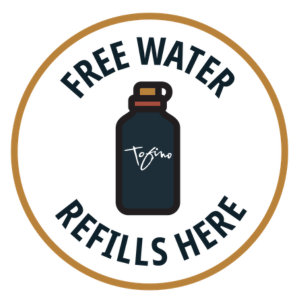
Throughout the community, look for businesses offering free water bottle refills by locating the sticker below on storefronts. Businesses can request stickers by contacting Bylaw Services.
Frequently Asked Questions
Have a question about the bylaw that isn't answered above? Email Bylaw Services.